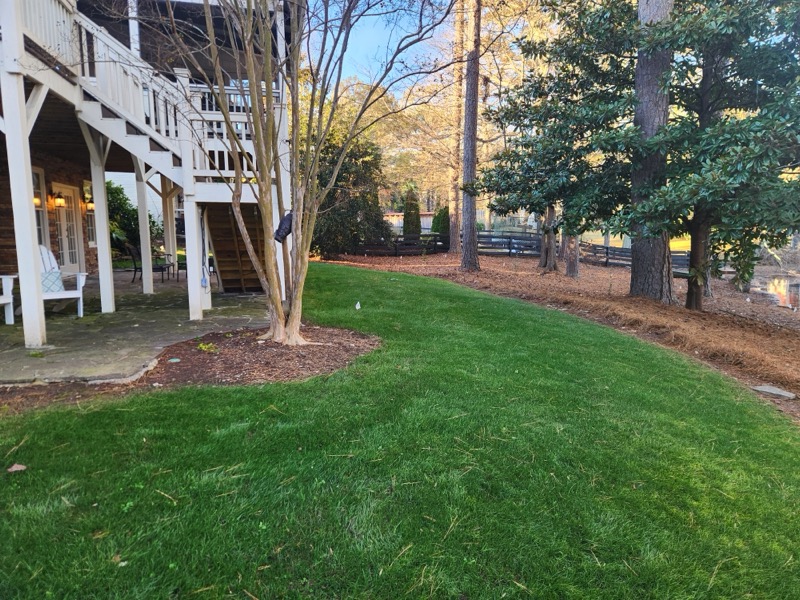
If your Georgia lawn looks thin, tired, or just refuses to respond to fertilizer, the problem might be right under your feet. Compacted soil is one of the most common lawn issues in North Georgia. And aeration is the fix.
But timing matters. Aerate at the wrong time and you can actually hurt your lawn instead of helping it. Get the timing right and you will see thicker, greener turf within weeks.
This guide breaks down exactly when to aerate your lawn in Georgia based on your grass type, your soil conditions, and your local climate here in Zone 8a.
What Is Lawn Aeration?
Aeration is the process of pulling small plugs of soil out of your lawn. A core aerator punches hollow tines into the ground about two to three inches deep. It pulls up small cores of soil and deposits them on the surface.
Those holes let air, water, and nutrients reach the root zone. The cores break down on their own over a week or two and add organic material back into the turf.
Think of it like this. Your lawn’s roots need to breathe. When the soil gets packed down tight, roots suffocate. Water pools on the surface instead of soaking in. Fertilizer sits on top and washes away. Aeration opens things up so your lawn can actually use what you give it.
It sounds simple. It is. But the timing makes all the difference.
Why Georgia Lawns Need Aeration More Than Most
Here in North Georgia, we deal with heavy red clay soil. If you have ever tried to dig a hole in your Alpharetta yard after a dry spell, you know exactly what we are talking about. That clay compacts like concrete.
Foot traffic makes it worse. So do riding mowers, kids playing in the yard, and pets running their daily laps. Over time, the top few inches of soil become so dense that grass roots cannot push through.
Red clay also holds water near the surface. That leads to shallow root systems. Shallow roots mean your lawn cannot handle drought stress in July and August. It turns brown faster. Recovers slower. Looks worse than it should.
Annual aeration is not optional for most Georgia lawns. It is essential.
Lawn Aeration Schedule for Georgia: Timing by Grass Type
The single most important rule for aeration timing is this: aerate during your grass’s active growing season. That way, the turf recovers quickly and fills in the holes with new growth.
Here in North Georgia, that means different timing for different grasses.
Bermuda Grass Aeration Timing
Bermuda is a warm-season grass. It grows fastest when temperatures are between 80 and 95 degrees. That makes late spring and early summer the ideal aeration window.
Best time to aerate bermuda in Georgia: Late April through June.
Wait until the bermuda has fully greened up and is actively growing. You want at least two to three weeks of strong growth before you aerate. That way the grass is ready to bounce back fast.
Do not aerate bermuda in the fall. The grass is slowing down and heading toward dormancy. Those aeration holes will stay open and become an invitation for winter weeds like annual bluegrass and henbit.
Tall Fescue Aeration Timing
Fescue is a cool-season grass. It grows best when air temperatures are between 60 and 75 degrees. Fall is when fescue thrives in Georgia.
Best time to aerate fescue in Georgia: Mid-September through early November.
Fall aeration pairs perfectly with overseeding. Aerate first, then spread fescue seed right into the holes. The seed-to-soil contact is outstanding. Add a starter fertilizer and you have set your fescue lawn up for a great spring.
Avoid aerating fescue in the summer. Georgia’s heat already stresses cool-season grasses. Punching holes in the turf during a 95-degree July is a recipe for damage, not improvement.
Zoysia Grass Aeration Timing
Zoysia falls somewhere between bermuda and fescue in terms of growth habits. It is a warm-season grass but greens up a little later and goes dormant a little earlier than bermuda.
Best time to aerate zoysia in Georgia: May through mid-July.
Zoysia is a slow grower, so give it plenty of warm weather to fill in after aeration. Early in the season works well because the grass has the whole summer to recover.
Centipede Grass Aeration Timing
Centipede is less common in North Georgia, but some lawns in the southern parts of our service area have it. Like bermuda and zoysia, centipede is a warm-season grass.
Best time to aerate centipede in Georgia: Late May through June.
Centipede is a low-maintenance grass that does not like heavy fertilization. Aeration alone can make a noticeable difference in its health because it improves nutrient uptake without the risk of over-feeding.
Signs Your Lawn Needs Aeration
Not sure if your lawn needs aeration this year? Look for these signs.
Water pools on the surface after rain. If water sits on top of your lawn instead of soaking in, the soil is too compacted. Healthy soil absorbs rainfall steadily. Compacted clay pushes it away.
The soil feels rock hard. Grab a screwdriver and try to push it into your lawn. If you have to lean on it with your full weight, the soil is compacted. In healthy soil, a screwdriver slides in with moderate pressure.
Your lawn has heavy foot traffic areas. Paths between the driveway and the back door. The spot where the kids play. The area around the trampoline. High traffic zones compact faster.
Thatch buildup is more than half an inch. Thatch is that spongy layer of dead grass and roots between the green blades and the soil surface. A little thatch is fine. More than half an inch blocks water and nutrients. Aeration helps break it down.
Your lawn looks thin despite proper care. You water, fertilize, and mow at the right height. But the grass still looks sparse. Compacted soil is often the hidden culprit.
You have never aerated. If your lawn has gone more than two years without aeration, especially on Georgia clay, it almost certainly needs it. One season of aeration can transform a struggling lawn.
How Core Aeration Works
Professional core aeration uses a machine with hollow tines that punch into the ground. The machine pulls out plugs of soil about the size of your finger. These plugs get scattered across the lawn surface.
Here is what happens next. The holes allow oxygen to reach the root zone. Roots grow deeper because they can actually expand into looser soil. Water penetrates instead of running off. Fertilizer reaches the roots where it does the most good.
The soil plugs break down over one to two weeks. As they decompose, they help break down thatch naturally. Earthworms and microorganisms move into the holes and continue improving soil structure over time.
One pass with an aerator pulls about eight to twelve plugs per square foot. That is plenty for most lawns. Severely compacted yards may benefit from two passes in a crosshatch pattern.
DIY Aeration vs. Professional Aeration
You can rent a core aerator from most equipment rental shops. So is it worth doing it yourself?
DIY Aeration
Pros:
- Costs less upfront. Rental runs about $75 to $150 for half a day.
- You control the timing and can do it when the conditions are perfect.
- Good exercise, if you enjoy that sort of thing.
Cons:
- Rental aerators are heavy and hard to maneuver. They weigh 200 to 300 pounds.
- You need a truck or trailer to transport the machine.
- Consumer-grade rental units do not pull cores as deep or consistently as professional equipment.
- You might miss problem areas or aerate at the wrong depth.
- The whole process takes longer than you expect.
Professional Aeration
Pros:
- Commercial-grade machines pull deeper, more uniform cores.
- A trained crew finishes faster and covers the lawn more thoroughly.
- Professionals can spot issues during the process. Grub damage, drainage problems, and soil pH issues often become visible during aeration.
- Many pros combine aeration with overseeding and fertilization in a single visit. That saves you time and gets better results.
Cons:
- Costs more than DIY. Professional aeration in the Alpharetta area typically runs $100 to $300 depending on lawn size.
- You have to schedule around the company’s availability.
For most homeowners, professional aeration is worth the investment. The equipment is better. The results are more consistent. And you do not have to wrestle a 300-pound machine across your yard on a Saturday morning.
Our aeration service uses commercial equipment that pulls clean, deep cores every time. We can combine aeration with overseeding for fescue lawns or follow up with targeted fertilization for bermuda and zoysia.
Common Aeration Mistakes to Avoid
Aerating at the wrong time. This is the biggest mistake. Aerating bermuda in October or fescue in July can cause serious damage. Always match your timing to your grass type’s growing season.
Skipping the watering step. Water your lawn thoroughly the day before you aerate. Moist soil produces cleaner, deeper cores. Dry, hard clay resists the tines and produces shallow, ineffective holes.
Aerating when the lawn is soaking wet. There is a difference between moist and muddy. If the soil is saturated, the tines will just create a mess. Wait until the soil is damp but not squishy.
Using a spike aerator instead of a core aerator. Spike aerators poke holes but do not remove soil. They can actually increase compaction around the holes. Always use a core aerator that pulls plugs.
Removing the soil plugs. Leave them on the lawn. They look messy for a few days, but they break down quickly and return valuable organic material to the turf. Raking them up defeats part of the purpose.
Not flagging sprinkler heads and utility lines. An aerator will destroy a sprinkler head instantly. Mark all irrigation heads, shallow utility lines, and invisible fence wires before you start.
What to Do After Aeration
Aeration is most effective when you follow it up with the right steps.
For fescue lawns in fall: Overseed immediately after aerating. The holes create perfect pockets for seed-to-soil contact. Apply a starter fertilizer at the same time. Water lightly twice a day until the new seed germinates.
For bermuda and zoysia lawns in spring/summer: Apply a balanced fertilizer after aerating. The nutrients will reach the root zone directly through the aeration holes. Resume your normal watering schedule and keep mowing at the recommended height.
For all grass types: Avoid heavy foot traffic on freshly aerated turf for about two weeks. Let the grass fill in and the soil settle.
If you are dealing with significant thatch buildup or thin spots, consider combining aeration with topdressing. A thin layer of compost spread over the aerated lawn works wonders for soil health over time.
How Aeration Fits Into Your Overall Lawn Care Plan
Aeration is not a standalone fix. It works best as part of a complete lawn care program. Here is how it fits into the bigger picture.
Spring (warm-season grasses): Apply pre-emergent weed control in early March. Aerate bermuda and zoysia in late April through June. Fertilize after aeration.
Fall (cool-season grasses): Aerate fescue in September or October. Overseed immediately. Apply starter fertilizer. Apply a fall pre-emergent for winter weed control about three to four weeks after overseeding.
Year-round: Maintain proper mowing heights with regular lawn maintenance. Water deeply and less frequently. Test your soil pH every two to three years and adjust with lime if needed. Georgia clay tends to run acidic, and most turf grasses prefer a pH between 6.0 and 7.0.
Get Your Georgia Lawn Aerated at the Right Time
Timing is everything when it comes to lawn aeration in Georgia. Aerate during your grass’s peak growing season and you will see real results. Thicker turf. Deeper roots. Better drought resistance. A lawn that actually responds to the care you give it.
If you are in the Alpharetta area or anywhere across North Atlanta, our team at Rivendell Estate Care can handle the entire process. We use commercial-grade core aerators that pull clean, deep plugs. We know the right timing for every grass type grown in Zone 8a. And we can combine aeration with overseeding, fertilization, or a complete lawn care program.
Ready to give your lawn the breathing room it needs? Contact us for a free estimate. We will take a look at your turf, check the soil conditions, and recommend the best aeration schedule for your Georgia lawn.