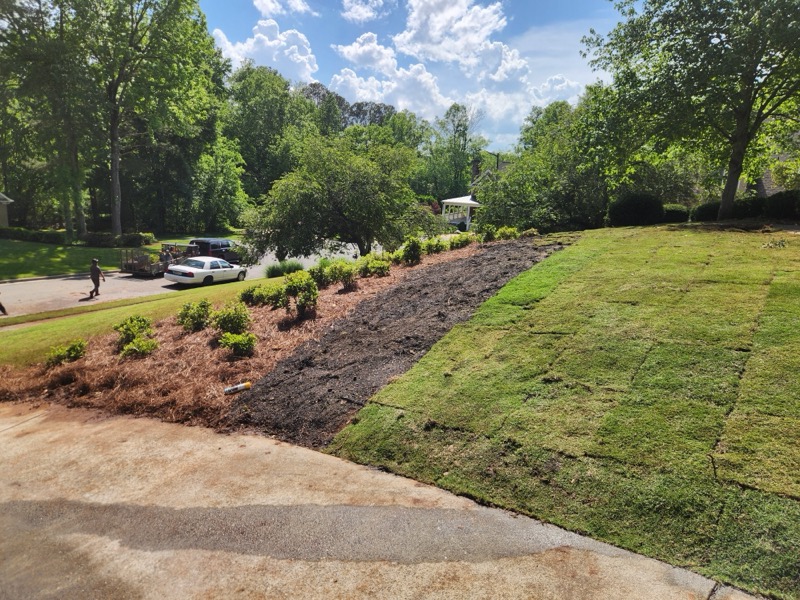
Picking the right grass for your North Georgia lawn is one of the most important landscaping decisions you will make. Choose well and you get a lawn that looks great with reasonable effort. Choose wrong and you are fighting an uphill battle every single season.
North Georgia sits in USDA Hardiness Zone 8a. That puts us right in the transition zone between warm-season and cool-season grasses. Both types can grow here. That is the good news. The tricky part is figuring out which one matches your yard, your lifestyle, and your expectations.
This guide covers the four most common grass types for North Georgia lawns. We will break down the strengths and weaknesses of each so you can make an informed choice.
Understanding North Georgia’s Growing Conditions
Before we get into specific grasses, let’s talk about what makes Zone 8a unique.
Our summers are hot and humid. July and August temperatures regularly hit the mid-90s. Afternoon thunderstorms keep humidity high. Warm-season grasses love this. Cool-season grasses just try to survive it.
Our winters are mild but unpredictable. Average low temperatures range from 0 to 10 degrees Fahrenheit in the coldest stretches, but most winter days stay above freezing. Warm-season grasses go dormant and turn brown. Cool-season grasses stay green.
The soil is predominantly red clay. It compacts easily, drains poorly in some areas, and tends to be acidic. Every grass type has to deal with this, so regular aeration matters no matter what you grow.
Shade varies widely from property to property. Mature hardwoods like oaks, hickories, and tulip poplars dominate many North Georgia neighborhoods. Some yards get full sun all day. Others sit under a dense canopy. Your shade situation will heavily influence your grass selection.
Tall Fescue
Tall fescue is the most popular cool-season grass in North Georgia. Drive through any Alpharetta neighborhood in January and the green lawns are almost certainly fescue.
Why Homeowners Love Fescue
Fescue stays green year-round. While bermuda lawns turn brown from November through April, fescue keeps its color through the winter months. For homeowners who care about curb appeal in every season, that matters.
It handles shade well. Fescue tolerates moderate shade much better than bermuda. If your yard has mature trees casting filtered light across the lawn, fescue is often the best option.
The texture is attractive. Newer turf-type tall fescue varieties have a finer blade than the old Kentucky 31 pasture grass. They create a dense, lush lawn that looks and feels great.
It germinates from seed. Unlike bermuda sod, you can establish or repair a fescue lawn from seed. That makes fall overseeding an affordable annual maintenance step.
Where Fescue Struggles
Summer heat is the enemy. Fescue does not love 95-degree days. Without consistent irrigation, it goes dormant or dies during Georgia’s hottest months. You need to water regularly from June through September to keep it alive.
It requires annual overseeding. Fescue is a bunch-type grass. It does not spread by runners like bermuda or zoysia. Thin spots do not fill in on their own. You need to overseed every fall to maintain density.
Disease pressure is real. Brown patch fungus hits fescue hard in late spring and early summer when nighttime temperatures climb above 65 degrees and humidity stays high. Proper mowing height and good air circulation help, but some years it is tough to avoid.
It needs more water. Plan on irrigating one to one and a half inches per week during the growing season. That adds up on your water bill.
Best For
Shaded yards, homeowners who want green turf year-round, and properties in the cooler microclimates around the Chattahoochee River corridor.
Maintenance Level
Moderate to high. Regular mowing at 3 to 3.5 inches, weekly watering in summer, annual fall overseeding, and disease monitoring.
Bermuda Grass
Bermuda is the king of warm-season turf in the South. It thrives in heat, handles heavy traffic, and spreads aggressively to fill in bare spots.
Why Homeowners Love Bermuda
It laughs at the heat. While fescue struggles to survive July, bermuda kicks into high gear. The hotter and sunnier it gets, the happier bermuda is.
It repairs itself. Bermuda spreads by both stolons and rhizomes. That means it sends out runners above and below the ground. Divots, thin spots, and minor damage fill in quickly during the growing season.
It handles traffic. Kids, dogs, backyard sports. Bermuda can take a beating and bounce back. This makes it the go-to choice for yards that get heavy use.
It is drought-tolerant. Once established, bermuda can survive extended dry spells by going dormant. When rain returns, it greens back up. Fescue does not have that luxury.
Lower water needs overall. During the growing season, bermuda needs less supplemental irrigation than fescue.
Where Bermuda Struggles
Shade kills bermuda. This is not an exaggeration. Bermuda needs a minimum of six hours of direct sunlight per day. In heavy shade, it thins out, weakens, and eventually dies. If your yard has big hardwoods, bermuda is not the answer.
Winter dormancy. From roughly mid-November through mid-April, bermuda turns brown. Completely brown. Some homeowners do not mind. Others hate looking at a tan lawn for five months.
It invades everything. Bermuda does not respect borders. It will creep into your flower beds, between pavers, under fences, and into your neighbor’s yard. Keeping it contained requires regular edging and bed maintenance.
Mowing frequency is high in summer. Bermuda grows fast in the heat. You will need to mow once or twice a week from May through September to keep it at the proper height of 1 to 1.5 inches.
Best For
Full-sun properties, active families, sports-oriented yards, and homeowners who do not mind winter dormancy.
Maintenance Level
Moderate. Frequent mowing in summer, regular fertilization, annual dethatching or aeration, and diligent edging to prevent invasion.
Zoysia Grass
Zoysia is sometimes called the “Goldilocks” grass for the transition zone. It offers a middle ground between fescue’s shade tolerance and bermuda’s heat resilience.
Why Homeowners Love Zoysia
The texture is beautiful. Zoysia creates a thick, carpet-like lawn that feels amazing underfoot. The fine blades grow densely and give the turf a premium look.
Decent shade tolerance. Zoysia handles partial shade better than bermuda. It will not thrive in deep shade, but it can manage areas that get four to five hours of sunlight.
It chokes out weeds. A well-established zoysia lawn is so dense that weeds have a hard time getting a foothold. Less weeding means less time and less money spent on weed control.
Lower fertilizer needs. Zoysia does not require as much nitrogen as bermuda. Two to three pounds of nitrogen per thousand square feet per year is usually sufficient.
Good drought tolerance. Like bermuda, zoysia can go dormant during dry spells and recover when moisture returns.
Where Zoysia Struggles
Slow establishment. Zoysia grows slowly. Very slowly. Establishing a new zoysia lawn from plugs can take two to three growing seasons. Sod is faster but expensive.
Cost is higher. Zoysia sod costs more than bermuda sod. If you are covering a large area, the price difference adds up fast.
Dormancy period is longer. Zoysia goes dormant earlier in the fall and greens up later in the spring than bermuda. That means more months of brown turf.
Thatch buildup can be a problem. Zoysia’s dense growth habit means thatch accumulates faster. Annual aeration and occasional dethatching are necessary to keep the lawn healthy.
It does not handle heavy traffic as well as bermuda. Zoysia recovers from damage, but slowly. A bermuda lawn bounces back in days. Zoysia can take weeks.
Best For
Homeowners who want a premium-looking lawn, properties with a mix of sun and partial shade, and those willing to invest more upfront for a low-maintenance turf long-term.
Maintenance Level
Low to moderate. Mow at 1 to 2 inches, fertilize two to three times per year, annual aeration, and monitor for thatch buildup.
Centipede Grass
Centipede is sometimes called the “lazy man’s grass” because of its low maintenance requirements. It is less common in North Georgia than bermuda or fescue, but some properties have it.
Why Homeowners Love Centipede
Minimal fertilization needed. Centipede actually performs poorly if you over-fertilize it. One to two pounds of nitrogen per thousand square feet per year is plenty. Less fertilizer means less cost and less work.
Moderate shade tolerance. Similar to zoysia, centipede can handle light to moderate shade. Not deep shade, but filtered sunlight works.
Low mowing height is not required. Centipede maintains well at 1.5 to 2 inches. It grows slowly, so mowing frequency is lower than bermuda.
Where Centipede Struggles
Cold tolerance can be marginal in our area. While centipede does well in Zone 8, a hard freeze can still damage or kill it, especially in exposed areas. If you live in the northern reaches of Cherokee or Forsyth County, centipede is risky.
It does not handle traffic well at all. Centipede is fragile compared to bermuda and zoysia. Heavy foot traffic will wear it down quickly.
Iron deficiency is common. On Georgia’s clay soil, centipede often develops iron chlorosis, a yellowing of the blades caused by the soil’s inability to release iron. You may need regular iron supplements.
Slow to recover from damage. Like zoysia, centipede spreads by stolons. But it spreads even more slowly. Bare spots take a long time to fill in.
Best For
Low-traffic areas, homeowners who want minimal maintenance, and properties in the warmer southern edges of Zone 8a.
Maintenance Level
Low. Minimal fertilization, less frequent mowing, but watch for cold damage and iron deficiency.
Shade vs. Sun: Quick Reference
Your lawn’s sun exposure should be the starting point for choosing a grass type. Here is a quick breakdown.
Full sun (8+ hours): Bermuda is your best bet. It thrives in heat and handles everything summer throws at it.
Mostly sun (6-8 hours): Bermuda or zoysia. Both perform well with this much light.
Partial shade (4-6 hours): Zoysia or tall fescue. Bermuda will struggle. Fescue does well if it gets morning sun.
Heavy shade (less than 4 hours): Tall fescue is your only real turf option. Even fescue may thin in very heavy shade. At some point, a shade garden with groundcover makes more sense than fighting for grass.
Mixing Grass Types: Good Idea or Bad Idea?
Some homeowners try to grow bermuda in the sunny front yard and fescue in the shaded back. In theory, it makes sense. In practice, it creates headaches.
Bermuda will invade the fescue areas. It sends runners into any adjacent turf. Keeping a clean boundary between the two is nearly impossible without physical edging.
The maintenance schedules conflict. Bermuda needs spring fertilization and summer focus. Fescue needs fall overseeding and summer babysitting. Managing both on one property doubles the work.
If you have dramatically different sun conditions across your property, the best approach is usually to commit to one grass type for the turf areas and use landscape plantings in the zones where that grass cannot thrive.
Making the Right Choice for Your Property
Choosing the best grass type for your North Georgia lawn comes down to three questions.
How much sun does your yard get? Walk your property at different times throughout the day and note the sun patterns. Shade from mature trees changes seasonally as leaves grow in and drop off.
How much maintenance are you willing to do? Be honest with yourself. If you do not want to water regularly in summer, fescue will disappoint you. If you hate mowing twice a week, bermuda in July will drive you crazy.
What do you want your lawn to look like in winter? If a brown lawn from November to April is acceptable, warm-season grasses give you more options. If year-round green matters, fescue is the answer.
Our team at Rivendell Estate Care works with all of these grass types every week across the Alpharetta, Roswell, Milton, and Johns Creek areas. We see what works and what does not on hundreds of properties throughout Zone 8a.
If you are starting a new lawn, patching bare areas, or thinking about converting from one grass type to another, we can help. Our sod installation and lawn maintenance services are tailored to whatever turf type suits your property best.
Get in touch for a free estimate. We will walk your property, assess the sun and shade conditions, and recommend the grass type that will give you the lawn you want without more work than you are willing to put in.