Sod Installation Tips for North Georgia Properties
We’ve laid a lot of sod across Alpharetta and the surrounding communities. Here’s what makes the difference between sod that thrives and sod that fails.
Soil Prep Is Everything
This is the part most people — and some contractors — want to skip. But the truth is, soil preparation accounts for about 80% of a successful sod job. If you lay beautiful sod on top of compacted red clay, it’ll look great for a week and then start declining.
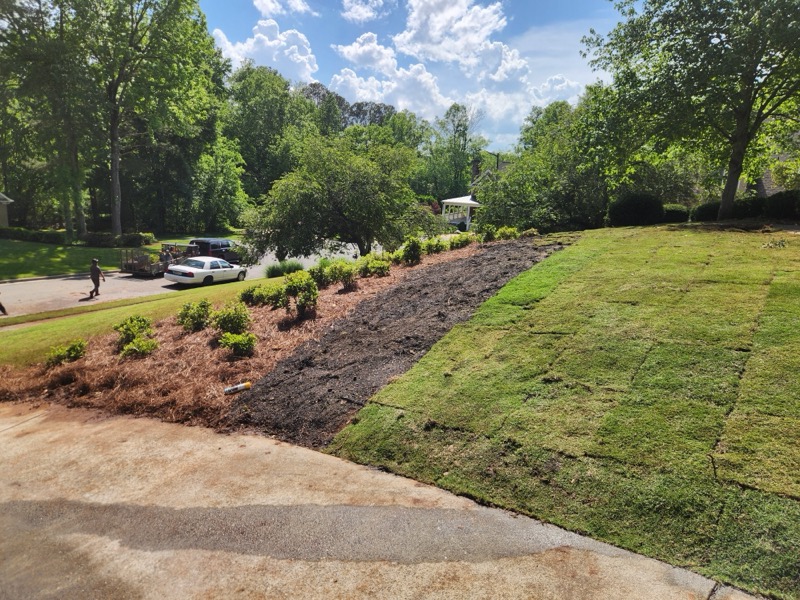
We till the soil, work in amendments when needed, and grade it properly. The goal is a surface that’s loose enough for roots to penetrate, drains well enough that water doesn’t pool, and slopes away from the house.
Don’t Let Sod Sit on the Pallet
Fresh sod is a perishable product. Once it’s harvested, the clock is ticking. Sod that sits on a pallet for more than 24 hours — especially in Georgia summer heat — starts cooking from the inside out. We coordinate delivery and installation so the sod goes from the farm to your yard the same day.
If you see a landscaper stacking sod pallets on a job site on Friday for a Monday install, that’s a red flag.
Water Like Your Lawn Depends on It
The first two weeks after installation are critical. New sod needs water — a lot of it. Twice daily for the first week, then once daily for the second week, then every other day as roots take hold. Underwatering is the single most common reason new sod fails.
And don’t just run the sprinklers for five minutes. You need to soak through the sod and into the soil beneath it so roots grow downward, not sideways looking for moisture.
Match Your Grass to Your Conditions
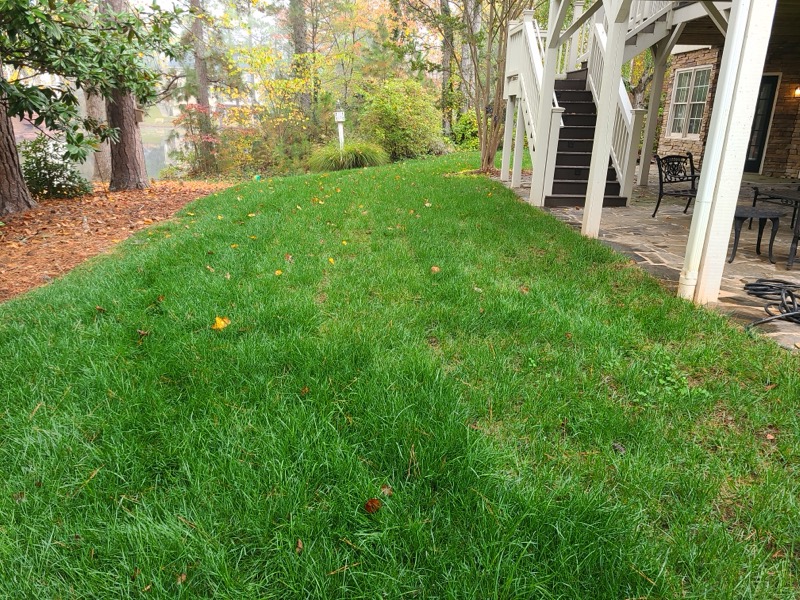
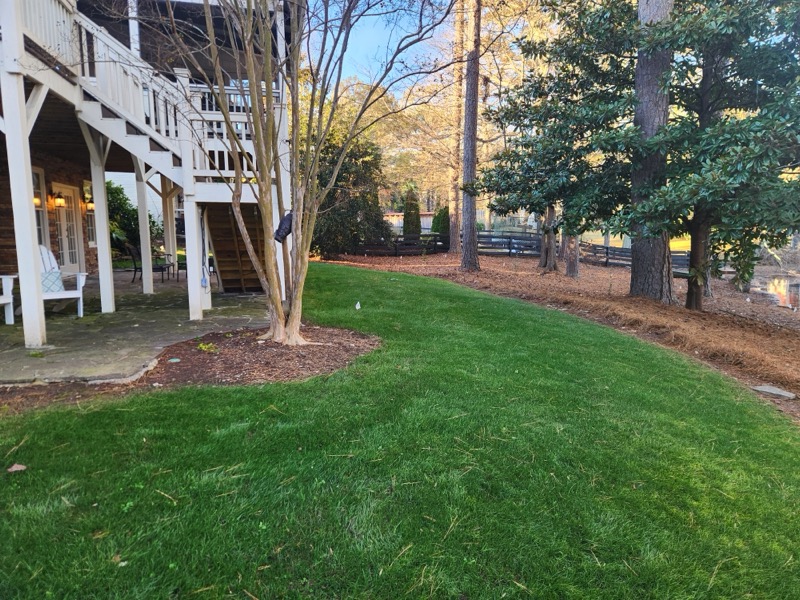
We see homeowners install Bermuda in heavy shade because they like the way it looks. It won’t work. Bermuda needs 6 to 8 hours of direct sun minimum. In a shaded North Georgia backyard with mature oaks and pines, Fescue is the answer. Yes, Fescue requires overseeding every fall — but it’s the only turf that thrives in deep shade around here.
Be honest about your conditions and pick the grass that fits. Fighting nature is expensive and frustrating.
Time It Right
Laying warm-season sod in October is asking for trouble. The grass goes dormant before it roots in, and you’re gambling on whether it survives winter. Bermuda and Zoysia should go down from May through July when soil temps are warm and the grass is in active growth mode.
Fescue is the opposite. Fall installation — September through mid-November — gives it cool-season growing conditions to establish before summer stress arrives. Get the timing wrong and you’re paying twice.