Pine Straw and Mulch Tips for Alpharetta Homeowners
When’s the last time you really looked at your mulch beds? If it’s been a while, here’s what you should know.
Don’t Volcano Mulch Your Trees
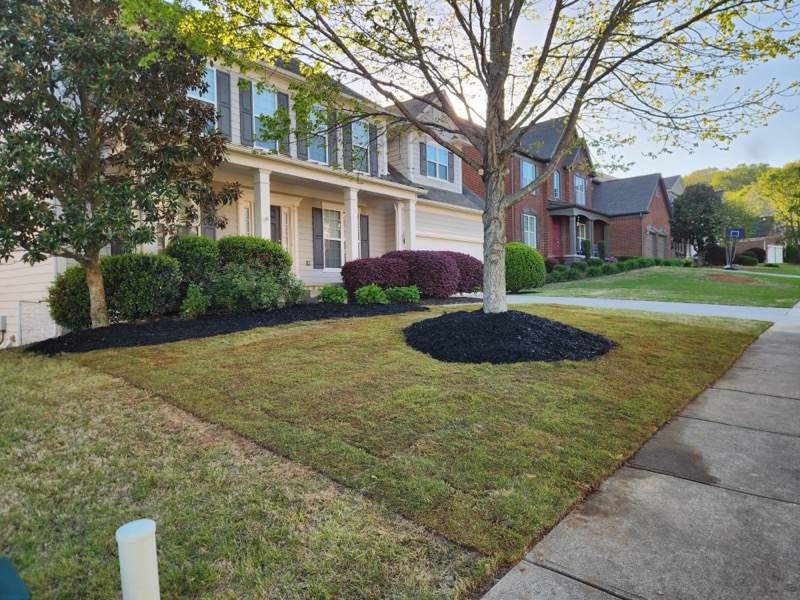
Piling mulch up against tree trunks is one of the most damaging landscaping habits we see across Alpharetta. It traps moisture against the bark, promotes decay, and attracts insects that bore into the trunk. Always keep a 3 to 6 inch mulch-free zone around every tree. If your current mulch is piled up like a volcano, pull it back today.
Match the Material to the Location
Use hardwood mulch in beds close to the house where you want a polished, manicured look. Use pine straw in large natural areas and under existing pine trees where it blends in. Use pine bark nuggets around azaleas and camellias that prefer acidic conditions. The right material in the right spot makes everything look intentional.
Time Your Applications for Maximum Benefit
In Alpharetta, spring mulch installation — March through April — gives you a fresh look heading into the growing season and puts down weed suppression right when seeds are germinating. Fall pine straw — October through November — freshens things up for the holidays and insulates roots heading into winter cold.
More Is Not Better
Deeper than 4 inches is too much. Over-mulching suffocates roots, creates conditions that are too wet for many plants, and can actually harbor rodents. Stick to 2 to 3 inches for mulch, 3 to 4 for pine straw. If your beds are already well-covered, a light top-dress is all you need. Resist the urge to keep piling it on year after year.
Pine Straw Wins on Slopes
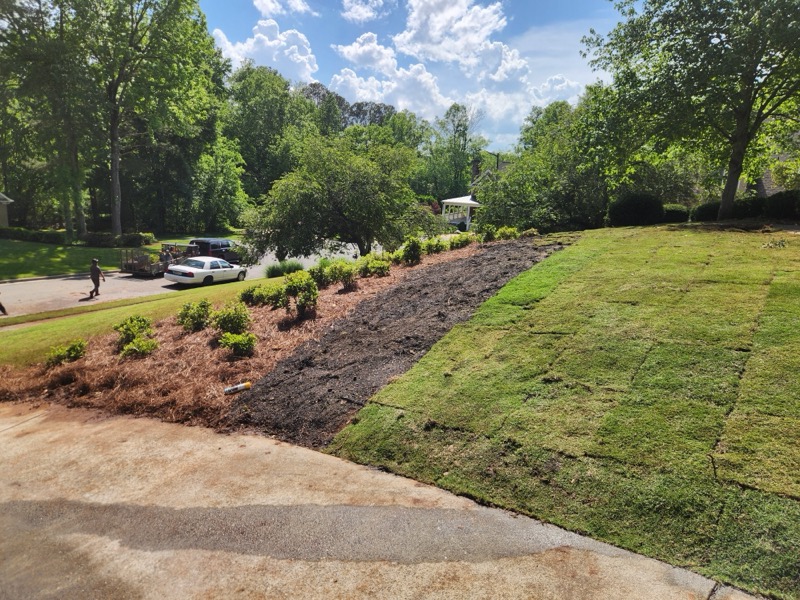
If you have sloped beds that wash out during heavy rains, pine straw is the answer. The interlocking needles grip each other and stay in place on grades where mulch would slide downhill after the first thunderstorm. For steep slopes with serious erosion, combine pine straw with proper drainage work for a permanent fix.