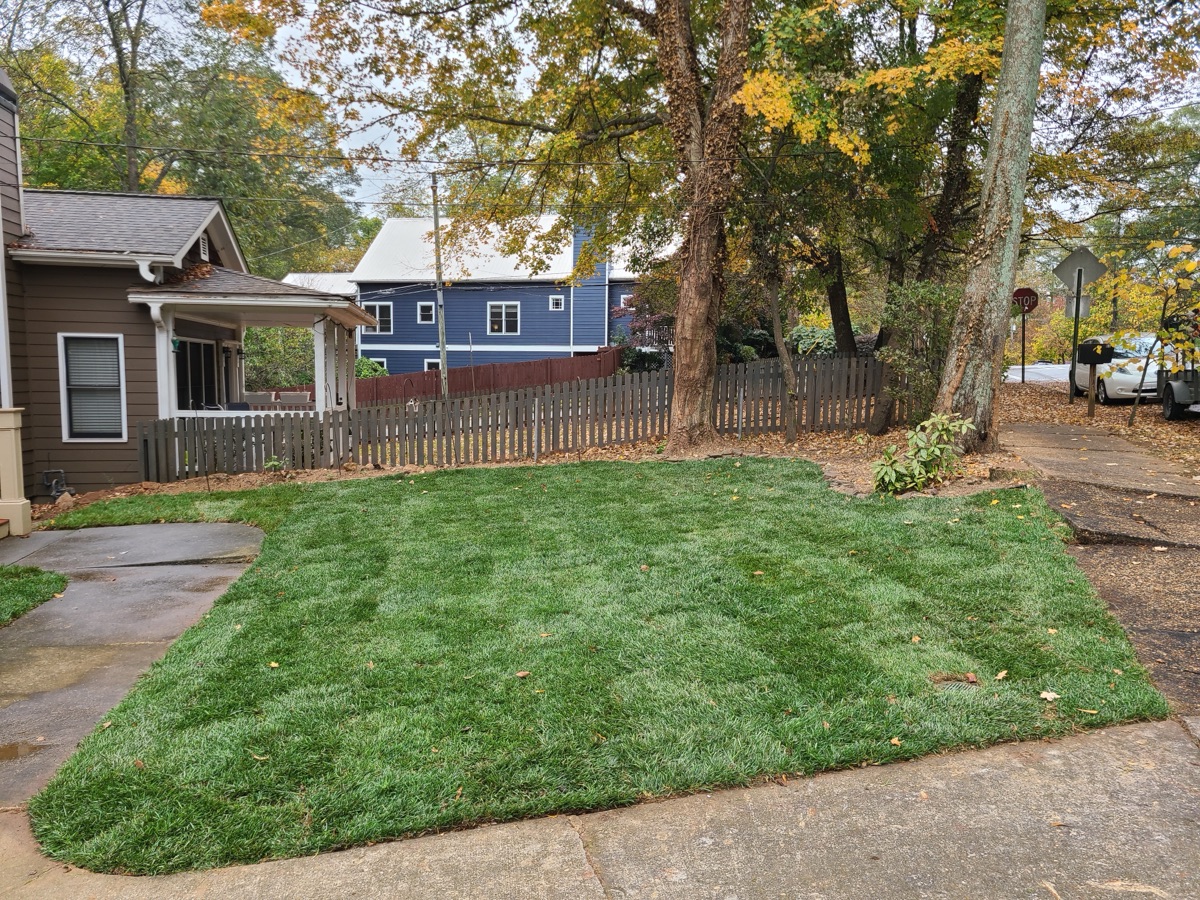
This is the great lawn debate in North Georgia. Fescue or bermuda? Walk down any street in Alpharetta and you will see both. The green lawns in January are fescue. The thick, low-cut lawns in July are bermuda. Both can look fantastic. Both have real tradeoffs.
North Georgia sits right in the transition zone between the cool-season grass regions to our north and the warm-season grass regions to our south. That means both fescue and bermuda can grow here. But “can grow” and “will thrive” are different things. The right choice depends on your specific property, your time, your budget, and what you expect from your lawn.
This guide gives you an honest, detailed comparison so you can make the call with confidence.
The Quick Answer
If you want the short version before the deep dive:
- Choose bermuda if you have full sun, want a low-mow-height lawn that handles heat and traffic, and can live with brown grass in winter.
- Choose fescue if you have shade, want green turf year-round, and are willing to put in extra effort during summer.
Now let’s get into the details.
Appearance: How They Look Through the Seasons
Bermuda Through the Year
Spring (March-April): Bermuda breaks dormancy as soil temperatures warm. It greens up gradually from late March through April. During this transition period, the lawn can look patchy as some areas wake up before others.
Summer (May-September): This is bermuda’s time to shine. Dense, dark green turf that handles 95-degree days without breaking a sweat. Properly maintained bermuda at 1 to 1.5 inches looks like a golf course fairway.
Fall (October-November): Growth slows. Color starts to fade as nighttime temperatures drop. By late November, bermuda is fully dormant.
Winter (December-February): Brown. Completely brown. Bermuda goes tan and stays that way until spring. Some homeowners overseed bermuda with ryegrass for winter color, but that comes with its own set of complications and costs.
Fescue Through the Year
Spring (March-April): Fescue is already green and growing while bermuda is still waking up. It looks great in spring. This is when your neighbors with bermuda start getting jealous.
Summer (May-September): This is where fescue earns its maintenance reputation. It stays green if you water consistently. Without irrigation, it can go dormant, thin out, or die during a hot, dry July. Brown patch disease often attacks in June when nighttime temperatures rise above 65 degrees.
Fall (October-November): Fescue’s second strong season. Growth picks up as temperatures cool. Fall is the time for overseeding, and a freshly overseeded fescue lawn in November looks incredible.
Winter (December-February): Still green. While the bermuda lawns next door are brown, your fescue stays a deep, rich green through the winter months. Growth slows but the color persists.
Sun and Shade Requirements
This is often the deciding factor in North Georgia. Many properties here have significant shade from mature hardwoods.
Bermuda and Sun
Bermuda needs sun. Lots of it. A minimum of six hours of direct sunlight is necessary. Eight hours or more is ideal. In shade, bermuda thins progressively until it dies. There is no bermuda variety that performs well in moderate shade. Period.
If your front yard gets full sun but your backyard sits under a canopy of oaks and hickories, bermuda will work in front and fail in back. You cannot force bermuda to grow in shade.
Fescue and Shade
Fescue handles shade much better. It performs well with as little as four hours of sunlight, especially if that sun comes in the morning. Dappled shade under a high canopy works too. Deep shade with less than three hours of sun will thin out even fescue, but it hangs on far longer than bermuda would.
For properties with mature trees across much of the yard, fescue is usually the only realistic turf option. The alternative is a shade garden, which can actually be more attractive than a struggling lawn.
Maintenance Comparison
Here is where the two grasses really diverge.
Mowing
Bermuda: Mow at 1 to 1.5 inches with a reel mower for the best look, or up to 2 inches with a rotary mower. During peak summer growth, bermuda needs mowing once or twice per week. It grows fast in the heat.
Fescue: Mow at 3 to 3.5 inches. Never cut more than one-third of the blade length at a time. Weekly mowing is sufficient during the growing season. The taller mowing height actually helps fescue survive summer by shading its own root zone.
Watering
Bermuda: Needs about one inch of water per week during the growing season. It can survive without supplemental irrigation by going dormant during droughts. It greens up when rain returns.
Fescue: Needs one to one and a half inches of water per week year-round during active growth. In a Georgia July, that means running your irrigation system regularly. Without consistent watering, fescue does not just go dormant like bermuda. It often dies and does not come back.
This is the biggest ongoing cost difference between the two grasses. Fescue’s summer water bill can be significant.
Fertilization
Bermuda: Fertilize during the growing season, May through August. Three to four pounds of nitrogen per thousand square feet per year is typical. Do not fertilize bermuda in the fall or winter. That energy goes to waste when the grass cannot use it.
Fescue: Fertilize primarily in the fall, September through November. A light spring application is acceptable but do not fertilize fescue in summer. Summer fertilization pushes top growth at the worst time and increases disease susceptibility.
Overseeding
Bermuda: Does not need overseeding. Bermuda spreads on its own through stolons and rhizomes. Bare spots fill in naturally during the warm months.
Fescue: Needs annual overseeding in the fall. Fescue is a bunch-type grass. It does not spread. Thin spots stay thin unless you add seed. Skip overseeding for a year or two and the lawn deteriorates noticeably. Each fall, you should aerate and spread fresh seed across the entire lawn. Our aeration and overseeding service handles this in a single visit.
Disease
Bermuda: Relatively disease-resistant in Georgia. Dollar spot and spring dead spot can occur but are less common than fescue’s problems.
Fescue: Susceptible to brown patch fungus, which hits hard in late spring and early summer. Pythium blight can appear during hot, wet stretches. Gray leaf spot shows up occasionally in late summer. Managing fescue in Georgia means staying alert for disease, especially from June through August.
Weed Control
Bermuda: A thick bermuda lawn chokes out most weeds naturally. Pre-emergent in spring handles crabgrass and goosegrass. Bermuda’s aggressive spreading habit is its own weed defense.
Fescue: Because fescue does not spread, weed pressure is higher. Any thin spot is an invitation for weeds. Pre-emergent is critical in both spring and fall. Post-emergent spot treatments are often needed through the season. Our weed management program is designed for these challenges.
Cost Comparison
Establishment Cost
Bermuda sod: $1.00 to $2.00 per square foot installed. Bermuda can also be established from seed at a much lower cost, though the results are slower and less uniform.
Fescue sod: $1.50 to $2.50 per square foot installed. Fescue can be established from seed for much less, typically $100 to $200 in seed for a 5,000-square-foot lawn plus time and effort.
Annual Maintenance Cost
Bermuda: Lower overall. Less water, no overseeding, fewer disease treatments. Expect $1,500 to $3,500 per year for professional maintenance on a typical North Atlanta residential lot.
Fescue: Higher due to summer irrigation, annual overseeding, and disease management. Expect $2,000 to $4,500 per year for professional maintenance on a similar lot.
The cost difference adds up over time. Over 10 years, a bermuda lawn can cost several thousand dollars less to maintain than a fescue lawn, primarily because of water savings and the elimination of annual overseeding.
Traffic and Use
Bermuda: Handles heavy traffic extremely well. This is why sports fields, playgrounds, and golf course fairways are bermuda. If you have kids playing in the yard daily, dogs running the same path, or regular outdoor entertaining, bermuda recovers from wear faster than any other common grass.
Fescue: Tolerates moderate traffic but does not recover well from heavy wear. Fescue does not spread to fill in damaged areas. Worn paths stay worn until you overseed in the fall. For high-traffic yards, fescue is at a disadvantage.
Drought Response
Bermuda: Goes dormant during extended drought. The top growth turns brown and the plant channels its energy to the root system. When moisture returns, bermuda recovers and greens up. It can survive several weeks of drought dormancy without permanent damage.
Fescue: Handles moderate dry spells by slowing growth. But extended drought without supplemental irrigation can kill fescue outright. The crown dies. The plant does not come back. You have to reseed those areas in the fall.
In a state that experiences periodic drought, this resilience factor matters. Bermuda gives you a safety net that fescue does not.
Winter Appearance
This is where fescue wins convincingly. From roughly late November through mid-April, bermuda is brown. Tan. Dormant. Some homeowners spray-paint their bermuda green. Others overseed with annual ryegrass for temporary winter color. Both approaches have drawbacks.
Fescue stays green all winter. It may slow down in the coldest weeks of January, but it holds its color. For homeowners who want their lawn to look alive 12 months a year, this is a major selling point.
Is winter color important enough to accept fescue’s summer challenges? Only you can answer that. But it is the single biggest aesthetic factor in this debate.
The Transition Zone Challenge
North Georgia’s transition zone location means neither grass is completely in its comfort zone.
Bermuda is pushing the northern edge of its range. We occasionally get hard freezes that damage bermuda, especially newer hybrid varieties. The 2014 polar vortex caused winterkill on bermuda lawns across the metro. Common bermuda recovers well from cold damage. Hybrid bermuda can be slower to bounce back.
Fescue is pushing the southern edge of its range. Our summers are hotter than what fescue truly prefers. That is why disease pressure is high and summer irrigation is a must. In a cool, wet summer, fescue looks incredible. In a hot, dry one, it struggles.
Both grasses can succeed here. Neither gets a free ride. The one you choose just determines which season requires the most effort.
Making Your Decision
Answer these five questions honestly.
1. How much shade does your yard have? More than 30 percent shade: Fescue. Full sun across the entire property: Either one works, but bermuda has the edge.
2. Do you have an irrigation system? Yes: Both options are on the table. No: Bermuda is the safer choice because of its drought dormancy.
3. How do you use your yard? Active use with kids, pets, sports: Bermuda. Light use, primarily visual: Either one works.
4. How important is winter color? Very important: Fescue. Not a priority: Bermuda.
5. What is your maintenance budget? Higher: Both options work. Tighter budget: Bermuda will cost less over time.
If you answered bermuda on three or more questions, go with bermuda. If fescue won three or more, go with fescue. If it is a tie, consider zoysia as a compromise — it handles partial shade better than bermuda and requires less summer babysitting than fescue.
We Work with Both
At Rivendell Estate Care, we maintain bermuda lawns, fescue lawns, and everything in between across the Alpharetta area. Our mowing crews adjust cutting heights and techniques for each grass type. Our weed management program is tailored to the specific challenges of warm-season and cool-season turf.
We also handle grass conversions. Switching from fescue to bermuda or vice versa is a big project, but sometimes it is the right move. If you are tired of fighting a losing battle with the wrong grass type, we can help you make the transition. Our sod installation service can give you a fresh start.
Not sure which grass is right for your property? Contact us for a free assessment. We will walk your yard, check the sun exposure, talk about your goals, and give you a straight recommendation. No sales pitch. Just honest advice from a team that deals with this question every single day.