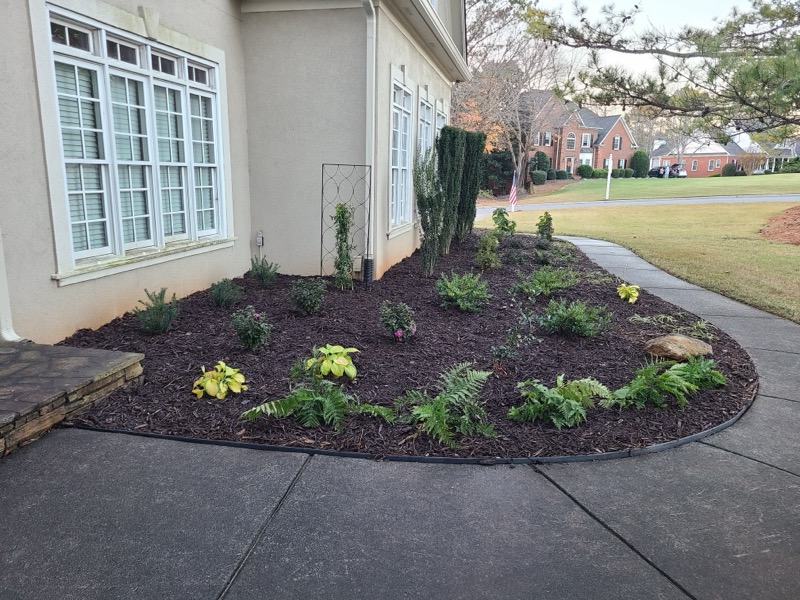
Shade is not a problem. It is an opportunity.
Plenty of North Georgia homeowners stare at the shady areas under their mature oaks and hardwoods and see a bare patch where grass refuses to grow. They fight it. They overseed. They try. The grass thins out every summer anyway.
Here is the truth. Some spots are not meant for lawn. They are meant for shade gardens. And shade gardens in Georgia can be absolutely stunning.
The canopy of mature trees creates a microclimate that is cooler, moister, and more sheltered than the open yard. Dozens of beautiful plants thrive in those conditions. Some even prefer them. This guide covers the best shade garden plants for Georgia and how to put them together into a landscape that looks intentional, lush, and easy to maintain.
Understanding Your Shade
Not all shade is created equal. Before picking plants, figure out what kind of shade you are working with. The type of shade determines what will thrive and what will just survive.
Light shade (dappled): Sunlight filters through a high canopy. You see moving patches of sun and shadow throughout the day. Most shade-tolerant plants do well here. Some sun-loving plants can make it too.
Partial shade: The area gets two to four hours of direct sunlight, usually morning sun with afternoon shade. This is the sweet spot for the widest range of shade plants. Morning sun is gentler than afternoon sun, so even sensitive plants handle it.
Full shade: Less than two hours of direct sunlight per day. Light is indirect and often comes from reflected surfaces rather than the sky. Fewer plants thrive here, but the ones that do can be spectacular.
Deep shade (dense): Under low-branching evergreens or against a north-facing wall with overhead canopy. Very little light reaches the ground. This is the most challenging environment. Groundcovers and ferns are your best options.
Also note whether your shade is dry or moist. Shade under mature trees is often dry because the tree roots absorb most of the available moisture. Shade on the north side of a building or near a downspout can be moist. Water availability matters as much as light levels.
The Best Shade Plants for North Georgia
These plants are proven performers in Zone 8a shade gardens. We install them on properties across Alpharetta, Roswell, Milton, and Johns Creek.
Hostas
Hostas are the backbone of Southern shade gardens, and for good reason. They come in hundreds of varieties ranging from six-inch miniatures to massive four-foot-wide specimens. Leaf colors include deep green, chartreuse, blue-gray, and stunning variegated combinations.
Where they shine: Partial to full shade. Morning sun with afternoon shade produces the best color on variegated types. Blue-leaved hostas keep their color better in deeper shade.
Growing tips: Hostas prefer rich, moist soil. Amend Georgia clay with plenty of compost before planting. Mulch heavily. Water during dry spells, especially in the first two years.
Watch out for: Slugs and deer. Slugs chew ragged holes in the leaves during wet weather. Deer eat hostas like candy. If deer pressure is heavy on your property, consider deer-resistant alternatives.
Best varieties for Georgia: ‘Sum and Substance’ (massive gold leaves), ‘Patriot’ (white-edged), ‘Halcyon’ (blue), ‘Guacamole’ (chartreuse center), ‘Empress Wu’ (the biggest hosta you will ever see).
Ferns
Ferns add a wild, natural texture that no other plant group can match. They are perfect for creating that woodland garden feel under mature trees.
Southern Shield Fern (Thelypteris kunthii): One of the toughest ferns for Georgia. It handles heat, humidity, and dry shade better than most ferns. Deciduous in winter but returns reliably every spring. Spreads slowly to form a lush groundcover.
Autumn Fern (Dryopteris erythrosora): New fronds emerge a coppery-bronze color and mature to deep green. Semi-evergreen in Zone 8a. Gorgeous year-round texture.
Japanese Painted Fern (Athyrium niponicum ‘Pictum’): Silver, purple, and green fronds that look almost too beautiful to be real. Partial shade with consistent moisture produces the best color. A standout in any shade garden.
Christmas Fern (Polystichum acrostichoides): A tough native fern that stays green through winter. Found growing wild in North Georgia woodlands. Low maintenance and deer resistant.
Lady Fern (Athyrium filix-femina): Delicate, finely divided fronds create an elegant texture. Native to Georgia and easy to grow. Dies back in winter but fills in quickly in spring.
Hellebores (Lenten Rose)
Hellebores are one of the few plants that bloom in late winter. From January through March, nodding flowers in shades of white, pink, purple, burgundy, and green appear while everything else is still dormant.
Where they shine: Partial to full shade. They handle dry shade better than most perennials, which makes them ideal under deciduous trees where root competition is tough.
Growing tips: Plant in well-drained soil amended with compost. Hellebores dislike wet feet. They are slow to establish but become tough, long-lived plants once settled. Cut back the old foliage in January before the new flower stalks emerge.
Why we love them for Georgia: They bloom when nothing else does. They are deer resistant. They are evergreen. They handle our heat and cold without complaint. Once established, they are basically indestructible. A clump of hellebores can live for 20 years or more.
Hydrangeas
Hydrangeas are Georgia classics, and most of them actually prefer some shade.
Oakleaf Hydrangea (Hydrangea quercifolia): This is a Georgia native and the state wildflower. Large white cone-shaped blooms in late spring. Spectacular burgundy and red fall color. The peeling bark provides winter interest. Handles full shade to partial sun. Drought-tolerant once established. It should be in every North Georgia shade garden.
Bigleaf Hydrangea (Hydrangea macrophylla): The classic mophead and lacecap types with blue or pink flowers. Color depends on soil pH — acidic soil produces blue, alkaline produces pink. Georgia’s naturally acidic clay usually gives you blue. Morning sun and afternoon shade is the ideal exposure.
Smooth Hydrangea (Hydrangea arborescens): ‘Annabelle’ is the most popular variety. Massive white snowball blooms in early summer. Native to the eastern U.S. and very shade-tolerant. Cut to the ground in late winter for the biggest flower heads.
Panicle Hydrangea (Hydrangea paniculata): Varieties like ‘Limelight’ and ‘Little Lime’ handle more sun than other hydrangeas but also do well in light shade. White flowers age to pink. Very reliable bloomers.
Native Azaleas
Forget the grocery-store azaleas for a moment. Georgia has native azaleas that are breathtaking and perfectly adapted to our shade gardens.
Florida Flame Azalea (Rhododendron austrinum): Golden-orange to yellow flowers in spring. Fragrant. Grows naturally in shade and tolerates Georgia heat well.
Piedmont Azalea (Rhododendron canescens): Light pink to white flowers with a sweet, spicy fragrance. Blooms in early spring before the leaves fully emerge. Found growing wild across North Georgia.
Plumleaf Azalea (Rhododendron prunifolium): Unique because it blooms in July and August when almost nothing else is flowering in the shade garden. Red-orange flowers on a tall, open shrub. Native to a small area of southwest Georgia but grows well throughout Zone 8a.
Native azaleas are deciduous, meaning they drop their leaves in winter. They do not have the year-round structure of evergreen azaleas, but their spring flowers and natural form more than compensate.
Solomon’s Seal (Polygonatum)
Solomon’s seal is an elegant, arching perennial with pairs of small white bell-shaped flowers that hang beneath the stems in spring. The foliage turns golden yellow in fall.
Where it shines: Partial to full shade. Handles dry shade under trees once established. Spreads slowly by rhizomes to form a graceful colony.
Growing tips: Plant in amended soil. Water regularly the first year. After that, Solomon’s seal needs very little attention. It is one of the most carefree shade perennials you can grow.
Variegated Solomon’s seal (Polygonatum odoratum ‘Variegatum’) has white-edged leaves that brighten dark corners beautifully. It is one of our favorite shade garden plants for Georgia properties.
Heuchera (Coral Bells)
Heuchera brings year-round foliage color to the shade garden. Varieties come in shades of lime green, deep purple, silver, amber, and nearly black. Small spikes of tiny flowers appear in spring and early summer.
Where it shines: Partial shade. Heuchera handles morning sun well but needs protection from afternoon heat in Georgia. Too much sun scorches the leaves.
Growing tips: Plant in well-drained soil. Heuchera is susceptible to crown rot if the soil stays too wet. Amend clay soil heavily and plant slightly elevated. Divide every three to four years when the woody crown pushes up out of the soil.
Best varieties for Georgia: ‘Palace Purple’ (classic deep burgundy), ‘Lime Rickey’ (bright chartreuse), ‘Obsidian’ (near-black), ‘Caramel’ (amber-apricot, excellent heat tolerance).
Astilbe
Astilbe produces feathery plumes of pink, red, white, or lavender flowers in late spring to early summer. The fern-like foliage is attractive even when the plant is not in bloom.
Where it shines: Partial shade with consistent moisture. Astilbe does not handle drought well, so it is best suited for irrigated beds or naturally moist areas.
Growing tips: Amend soil with compost and mulch heavily. Water during dry periods. Astilbe is not the most drought-tolerant option for Georgia, but in the right spot with adequate moisture, it is spectacular.
Japanese Maple (Acer palmatum)
No shade garden discussion is complete without Japanese maples. These small trees provide structure, color, and elegance that anchor the entire design.
Where they shine: Dappled to partial shade. In Georgia, afternoon shade is important. Full western sun can scorch the delicate leaves, especially on red and dissected-leaf varieties.
Growing tips: Plant in amended, well-drained soil. Japanese maples do not like wet feet. Mulch out to the drip line. Water deeply during dry spells in the first three years.
Best varieties for Georgia: ‘Bloodgood’ (deep red, reliable), ‘Seiryu’ (green dissected, one of the few upright dissected types), ‘Tamukeyama’ (cascading red, stunning in a garden bed), ‘Coral Bark’ (green leaves, red bark in winter).
Design Tips for Georgia Shade Gardens
Selecting the right plants is half the job. Arranging them well is the other half.
Layer Your Plantings
Create depth by planting in layers. Put tall plants like oakleaf hydrangeas and Japanese maples in the back or center. Mid-height plants like hostas, ferns, and hellebores fill the middle. Low groundcovers and creeping plants cover the front edges.
This layered approach mimics natural woodland plantings and creates a lush, full look even with relatively few plant species.
Use Foliage Color and Texture for Interest
In shade gardens, flowers are seasonal. Foliage is permanent. Design for leaf texture, color, and shape first. Flowers are a bonus.
Contrast broad hosta leaves with fine fern fronds. Place chartreuse heuchera next to deep green Christmas ferns. Use variegated Solomon’s seal to brighten a dark corner. These combinations create visual interest that lasts from spring through fall.
Create Paths and Access
Shade gardens under mature trees need pathways for access and maintenance. Stepping stones, mulched paths, or natural flagstone walkways let you get into the garden without compacting the soil around plant roots.
Paths also create structure in the design. They draw the eye through the space and invite people to explore.
Plan for Winter Interest
Georgia winters are mild, and your shade garden should still look good from December through February. Hellebores bloom in late winter. Christmas ferns and certain heucheras stay green. Oakleaf hydrangea bark peels attractively. Japanese maple branch structure is beautiful when bare.
Include enough evergreen and winter-interest plants that the garden does not disappear entirely in the dormant season.
Deal with Tree Roots
Planting under mature trees means dealing with surface roots. Do not pile soil on top of existing roots to create raised planting areas. That can suffocate the tree. Instead, plant between roots using hand tools. Choose plants that tolerate root competition and dry conditions.
Add a two to three-inch layer of mulch over the entire root zone. This improves soil over time without burying the roots. Our mulch and pine straw service keeps shade garden beds properly mulched and refreshed.
Soil Preparation for Shade Gardens
Georgia’s red clay needs work before it becomes a good growing medium for shade plants. Most shade-loving perennials prefer soil that is rich in organic matter, well-drained, and slightly acidic.
Step 1: Test your soil pH. Most shade plants prefer a pH between 5.5 and 6.5. Georgia clay is usually in this range already, but it is worth checking.
Step 2: Spread two to four inches of compost over the planting area. Work it into the top 8 to 12 inches of soil where possible. In areas with dense tree roots, spread compost on the surface and let it work in naturally over time.
Step 3: Add a two to three-inch layer of shredded leaf mulch or aged hardwood mulch. Refresh annually. This mimics the natural leaf litter on a forest floor and feeds the soil slowly.
Step 4: Avoid heavy tilling under mature trees. It damages feeder roots and can destabilize the tree. Dig individual planting holes by hand instead.
Transform Your Shaded Areas
The shady spots under your trees are not dead zones. They are some of the most beautiful planting opportunities on your property. A well-designed shade garden adds color, texture, and visual depth that a struggling patch of thin grass never will.
At Rivendell Estate Care, our design team creates shade garden plans tailored to your property’s specific conditions. We assess the light levels, soil type, moisture availability, and tree root patterns before recommending a single plant. Then our installation crew brings the design to life with quality plant material and proper technique.
We work with homeowners across Alpharetta, Roswell, Milton, Johns Creek, and the entire North Atlanta area. Whether you want to convert a single shady bed or design an entire woodland garden, we have the local knowledge to make it thrive.
Contact us for a free consultation. Let’s turn that bare spot under the trees into something worth looking at.