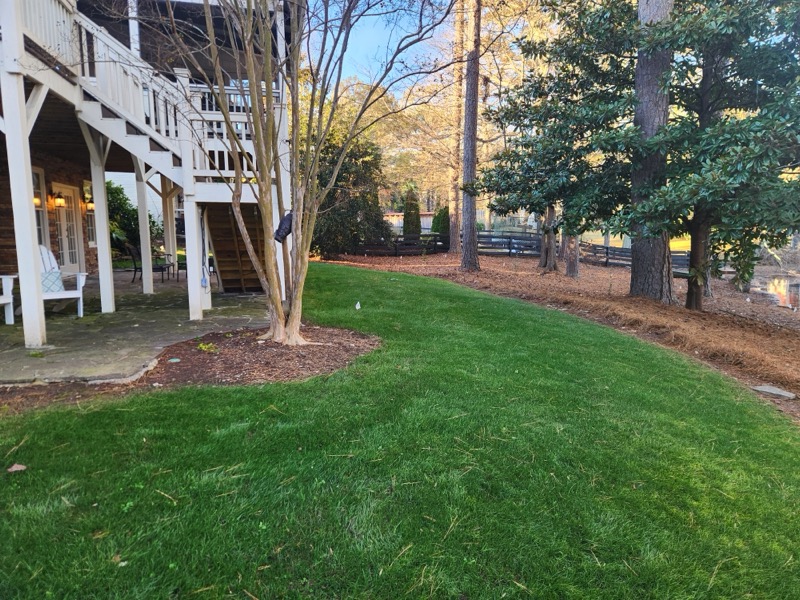
Georgia gets about 50 inches of rain per year on average. That sounds like plenty. So why does drought-resistant landscaping matter in Atlanta?
Because those 50 inches do not arrive on a convenient schedule. Georgia experiences cyclical droughts that can devastate traditional landscapes. The 2007 to 2009 drought brought outdoor watering restrictions across metro Atlanta. Many homeowners watched their lawns and gardens die despite investing thousands of dollars in their landscapes.
It happened before. It will happen again.
Drought-resistant landscaping is not about giving up on a beautiful yard. It is about designing a landscape that thrives with less water and survives when the rain stops. You can have color, texture, and curb appeal while cutting your water usage dramatically.
Here is how to do it right in the Atlanta and North Georgia area.
What Is Xeriscaping?
You may have heard the term xeriscaping. It comes from the Greek word “xeros,” meaning dry. But xeriscaping is not about filling your yard with gravel and cactus. That is a desert approach. Georgia is not a desert.
Xeriscaping in Atlanta means working with our climate rather than against it. It is built on seven principles:
- Planning and design — Group plants by water needs
- Soil improvement — Amend Georgia clay to improve water retention and drainage
- Appropriate plant selection — Choose plants adapted to our heat and occasional drought
- Practical turf areas — Limit lawn to areas where it is used and appreciated
- Efficient irrigation — Water smarter, not more
- Mulching — Reduce evaporation and moderate soil temperature
- Proper maintenance — Keep the landscape healthy so it handles stress better
None of these principles require you to sacrifice beauty. They just ask you to be smarter about how you design and maintain your outdoor space.
Georgia’s Drought Patterns
Understanding when and why drought hits Atlanta helps you plan a more resilient landscape.
North Georgia typically receives the most rainfall in winter and early spring. March is often our wettest month. Summers can be wet too, thanks to afternoon thunderstorms. But some summers the rain simply stops showing up. July, August, and September can be brutally dry.
The 2007-2009 drought was the most severe in modern memory. Lake Lanier dropped to dangerously low levels. Outdoor watering bans went into effect across multiple counties. Lawns turned brown across the entire metro.
Smaller drought events hit every few years. Even in “normal” years, stretches of three to four weeks without meaningful rain are common in summer. Your landscape needs to handle these dry spells without falling apart.
Drought-Tolerant Native Plants for Atlanta
Native plants are your strongest allies in a drought-resistant landscape. They evolved here. They handle Georgia heat, Georgia clay, Georgia humidity, and Georgia droughts because this is their home turf.
Native Trees
Eastern Red Cedar (Juniperus virginiana): Tough as nails. This evergreen thrives in poor soil, handles drought with ease, and provides year-round structure. It grows naturally across North Georgia in fields and along fence lines.
Southern Red Oak (Quercus falcata): A large shade tree that handles dry conditions much better than water oaks or willow oaks. Excellent for estate properties with room for a big canopy.
River Birch (Betula nigra): This is one of the few birches that handles Southern heat. It tolerates wet and dry conditions. The peeling bark provides winter interest that few other trees can match.
Loblolly Pine (Pinus taeda): Already common across North Georgia, loblolly pine is drought-tolerant once established. It grows fast and provides screening and shade.
Native Shrubs
Oakleaf Hydrangea (Hydrangea quercifolia): Georgia’s state wildflower. Stunning white blooms in spring, excellent fall color, and surprisingly drought-tolerant once its roots are established. Perfect for partial shade areas.
Yaupon Holly (Ilex vomitoria): An evergreen native that tolerates drought, poor soil, and heavy pruning. Available in dwarf forms for foundation plantings or full-size for screening. The berries attract birds in winter.
Virginia Sweetspire (Itea virginica): Fragrant white flower spikes in late spring. Brilliant red fall color. Grows well in sun or shade and handles both wet and dry conditions. Hard to beat for versatility.
American Beautyberry (Callicarpa americana): Bright magenta berries in fall make this shrub a showstopper. Grows in sun or partial shade. Once established, it shrugs off dry spells like they are nothing.
Summersweet (Clethra alnifolia): Sweet-smelling white or pink flower spikes in midsummer. Handles shade and dry conditions. A pollinator magnet.
Native Perennials and Grasses
Purple Coneflower (Echinacea purpurea): Classic native wildflower that blooms all summer. Loves full sun and needs almost no supplemental water after the first year.
Black-Eyed Susan (Rudbeckia fulgida): Golden yellow flowers from midsummer through fall. Tough, reliable, and drought-tolerant. Plant in masses for maximum impact.
Switchgrass (Panicum virgatum): A tall native grass that provides texture and movement. Beautiful seed heads in fall. Deep roots make it extremely drought-tolerant.
Little Bluestem (Schizachyrium scoparium): Blue-green foliage turns copper and bronze in fall. Grows in poor, dry soil. One of the best native grasses for residential landscapes.
Coral Honeysuckle (Lonicera sempervirens): A native vine with red tubular flowers that hummingbirds love. Unlike Japanese honeysuckle, it is well-behaved and will not take over your yard. Drought-tough once established.
Adapted Non-Native Plants That Handle Atlanta Droughts
Native plants are ideal, but plenty of adapted non-natives perform well in our climate too.
Crepe Myrtle (Lagerstroemia indica): Already everywhere in Atlanta for good reason. Crepe myrtles bloom all summer, handle heat beautifully, and need very little water once established. Just do not commit crepe murder — those flat-topped butchered trunks are hard to look at. Prune properly or not at all.
Knockout Roses: These bloom from spring through frost with minimal care. They handle heat and dry conditions well. Not zero maintenance, but close.
Liriope: Both liriope muscari and liriope spicata are workhorses in Atlanta landscapes. They handle sun, shade, dry soil, wet soil, and general neglect. Great for edging beds and covering slopes.
Nandina (dwarf varieties): Dwarf nandina like ‘Firepower’ and ‘Harbour Dwarf’ are compact, colorful, and drought-tolerant. Avoid the old-fashioned tall nandina, which has become invasive in some areas.
Lantana: Blooms nonstop in summer heat. Butterflies love it. Extremely drought-tolerant. Treat as an annual in the coldest parts of Zone 8a, but it often returns from the roots.
Designing for Water Efficiency
How you arrange plants matters as much as which plants you choose. Here are design strategies that reduce water use without sacrificing beauty.
Hydrozoning: Group Plants by Water Needs
This is the single most impactful thing you can do. Place plants with similar water needs together. Keep thirsty plants in one zone with easy access to irrigation. Put drought-tolerant plants in another zone where they can survive on rainfall alone.
A simple three-zone approach works well:
- High water zone: Close to the house where irrigation is easy. Use this area for plants that need regular moisture, like hydrangeas and impatiens.
- Moderate water zone: Mid-yard areas where plants get occasional supplemental water during dry spells. Azaleas, hostas, and most shrubs fit here.
- Low water zone: Edges of the property, slopes, and areas far from hose bibs. Plant drought-tolerant natives and adapted species that survive on rainfall.
Our landscape design team uses hydrozoning principles on every project. It makes a real difference in long-term water use and plant survival.
Reduce Turf Area Strategically
Lawns need the most water of anything in your landscape. Reducing turf area is the fastest way to cut water consumption. But you do not have to eliminate all your grass.
Keep lawn where you use it. Play areas for kids, spaces for entertaining, and front-yard turf for curb appeal. Replace lawn in areas where it struggles — steep slopes, deep shade under trees, and narrow strips between hardscape features.
Replace removed lawn with mulched beds, groundcover plantings, or hardscape features like patios and gravel paths. The water savings add up fast.
Use Permeable Hardscape
Traditional concrete and asphalt shed rainwater into storm drains. That is water your landscape never gets to use. Permeable pavers, gravel paths, and flagstone with planted joints allow rainwater to soak into the ground where plant roots can access it.
Our landscape design services include permeable paver installations for patios and walkways. They look great and work with your landscape’s water needs rather than against them.
Smart Irrigation Strategies
Efficient irrigation is not about watering less. It is about wasting less.
Drip Irrigation for Beds
Drip irrigation delivers water directly to the root zone of each plant. No overspray. No evaporation from sprinkler heads throwing water into the air. Drip systems use 30 to 50 percent less water than conventional spray heads for landscape beds.
Install drip irrigation in all planting beds. Run it under the mulch layer where water goes straight to the soil. Your plants get more usable water and you use less overall.
Spray Irrigation for Turf Only
Keep spray heads on your lawn areas where you need them. Use rotary nozzles or MP rotators instead of traditional spray nozzles. They apply water more slowly and uniformly, which reduces runoff on Georgia’s tight clay soil.
Water Early in the Morning
Run irrigation between 4 AM and 8 AM. Early morning watering reduces evaporation loss and gives foliage time to dry before nightfall. Wet leaves overnight invite fungal disease, especially in our humid summers.
Install a Smart Controller
Smart irrigation controllers adjust watering schedules based on weather data. They skip cycles when rain is expected and increase watering during hot, dry stretches. A smart controller can reduce outdoor water use by 20 to 40 percent compared to a standard timer.
Water Deeply and Less Often
Train your plants and turf to develop deep root systems by watering deeply but infrequently. For lawns, one inch of water twice a week is better than a quarter inch every day. Deep watering encourages roots to grow down into the soil where moisture persists longer.
The Power of Mulch
Mulch is one of the simplest and most effective water-saving tools in your landscape. A two to three-inch layer of organic mulch over your planting beds does several things at once.
It reduces evaporation. Bare soil loses moisture to the sun and wind. Mulched soil stays moist much longer between waterings. Studies show mulch can reduce soil moisture loss by 25 to 50 percent.
It moderates soil temperature. In July, bare soil in Atlanta can reach 130 degrees at the surface. That kind of heat damages roots and kills microorganisms. Mulch keeps the soil 10 to 20 degrees cooler.
It suppresses weeds. A solid mulch layer prevents weed seeds from reaching the soil surface and blocks light from seeds that are already there. Less weeds means less competition for water.
It improves soil over time. As organic mulch breaks down, it adds organic matter to Georgia’s clay soil. This improves the soil’s ability to hold moisture while still draining properly. It is a slow process, but it works.
Our mulch and pine straw service keeps your beds properly mulched year-round. We recommend refreshing mulch once a year and pine straw once or twice depending on the beds.
Soil Improvement: The Foundation
Georgia red clay is challenging. When it is wet, it holds water like a sponge. When it dries, it cracks like concrete. Neither extreme is good for plants.
Amending your soil with organic matter transforms its structure. Compost, aged bark, and decomposed leaf mold all help. Work two to four inches of compost into the top 8 to 12 inches of soil before planting. This creates a soil layer that holds moisture without staying waterlogged and drains without drying out completely.
Soil amendment is a one-time investment that pays dividends for decades. Your plants establish faster, grow stronger, and need less supplemental water because the soil around their roots actually works the way soil should.
Building a Drought-Resistant Landscape in Phases
You do not have to overhaul your entire property at once. A phased approach is practical and affordable.
Phase 1: Assess and plan. Look at your current landscape with water use in mind. Where is water being wasted? Where are plants struggling every summer? Have a professional design done that incorporates hydrozoning and drought-tolerant plant selections.
Phase 2: Start with the most impactful change. For many homeowners, that means replacing a high-water planting bed with drought-tolerant natives, improving irrigation efficiency, or adding mulch to bare beds.
Phase 3: Reduce turf where appropriate. Convert lawn areas that you do not use or that struggle in summer to mulched beds or groundcover plantings.
Phase 4: Upgrade irrigation. Convert spray heads in beds to drip irrigation. Install a smart controller. Adjust your watering schedule.
Phase 5: Continue adding drought-tolerant plants. As existing plants reach the end of their lifespan, replace them with native or adapted alternatives that need less water.
A Beautiful Landscape That Handles Whatever Georgia Throws at It
Drought-resistant landscaping is not a compromise. It is a smarter approach to creating outdoor spaces in our climate. The right plant in the right place with the right soil and the right watering strategy creates a landscape that looks fantastic in normal years and survives the tough ones.
At Rivendell Estate Care, we design and install landscapes that work with North Georgia’s climate. We know which plants thrive here. We know which ones just struggle and drain your water bill. And we know how to put it all together into a landscape you will love.
We serve homeowners across Alpharetta, Roswell, Milton, Johns Creek, and the greater North Atlanta area. From custom landscape design to plant installation and ongoing maintenance, we handle every step.
Contact us for a free estimate. Let’s build a landscape that looks great and does not fall apart the next time Georgia forgets to rain.